5 G promised higher throughput, tighter latency, and more reputable mobile experiences. Those gains do not emerge at the antenna; they're made in the backhaul. The course from a cell website to the core trips through a network of fibers, optics, and changing hardware that should bring hundreds of megabits per user with jitter measured in microseconds. Structure that path is where the humble, customized work of a fiber optic cables supplier intersects with the aspirations of nationwide providers, neutral hosts, and personal enterprises.
Why backhaul sets the ceiling for 5G performance
A radio layer can only provide what the transport layer can sustain. On a rural macro website with a 64T64R enormous MIMO selection, downlink traffic routinely peaks above 5 Gbps throughout hectic hours. Urban little cells add density instead of relief, pressing aggregate traffic even greater and producing more backhaul endpoints to feed. Latency targets for URLLC utilize cases hover well under 10 ms end to end. Slice seclusion expects deterministic behavior throughout transportation domains. Each of these requirements filters backward into the design of the fiber plant, the option of optical interfaces, and the geography of the aggregation network.
Microwave stays feasible for specific last-mile runs, especially in rugged locations. However where fiber is possible, it wins on capacity headroom, spectral immunity, and lifecycle economics. That doesn't indicate "pull more glass" is an insignificant instruction. It indicates defining the right cable geometry, fiber type, optical transceivers, and termination standards for a mix of aerial, underground, and building-entry situations. It also indicates lining up with open network switches and disaggregated routing so capability can scale without vendor lock-in or stranded costs.
The peaceful craft of specifying fiber for 5G
"Fiber is fiber" is an expression you hear just from individuals who do not have to keep it. Various sectors of a backhaul route need various mechanical and optical characteristics. I've seen jobs fail on something as ordinary as choosing a cable television too stiff to snake through old ducts or a fiber type that weakened future wavelength plans.
For outdoor aerial periods near traffic corridors, we prefer all-dielectric self-supporting (ADSS) cable with aramid strength members and UV-stable coats. Where energies insist on protected runs, specifically near electrical circulation, figure‑8 lashed building and constructions balance tensile strength with ease of setup. Underground pulls through existing avenue often require micro-duct compatible, high-count loose-tube cables. Micro-ducts let you add blowable fiber later without trenching once again, a spending plan saver when little cell density surges a few years down the line.
On the glass itself, G. 652. D single-mode stays the baseline for metro backhaul. It provides low attenuation and well-understood dispersion, plays nicely with CWDM in the O-band, and scales to city DWDM when you ultimately require more lanes. In long city rings or rural aggregation where periods exceed 40-- 60 km without regrowth, G. 654. E with lower loss can cut the variety of amplifiers or regenerators. For ultra-dense wavelength strategies near 1550 nm, low-PMD fiber and tight specifications on chromatic dispersion improve system margins, particularly when coherent optics get in the picture.
The fiber optic cable televisions provider makes their keep by matching these compromises to the realities of a given build. They maintain brochures deep enough to cover both typical and oddball requirements, however the value is in the advisory layer-- understanding which jacket substance survives seaside salt fog, which cable television design tolerates ice loading without extreme droop, and which armoring stands up to rodents and periodic backhoe brushes.
Construction approaches that keep promises and spending plans intact
I still remember a downtown fiber extension where the civil strategy looked easy on paper: 3 blocks of trench, two manholes, and a building entry. We lost a week to unmarked vaults and a tangle of tradition copper. What saved the schedule wasn't heroics; it was having pre-terminated, factory-tested assemblies waiting on the truck. We pivoted to a partial micro-duct technique, blew the subduct throughout the tidy areas, then utilized a low-profile indoor/outdoor transition cable for the building entry. The provider's familiarity with local energy guidelines and building codes shortened the decision loop.
Pull stress, bend radii, and splice case choice aren't abstract numbers. If you exceed them, efficiency breaks down in manner ins which are hard to detect months later. Good providers document maximum tensile loads and vibrant bend limitations plainly, and they provide pull eyes and coil management sets that field crews can utilize without uncertainty. I like seeing attenuation standards taken after each significant area and stored versus the circuit ID, then spot-tested post-splice. That routine catches lateral pressure damage early.
In harsh environments, water ingress stays a menace. Gel-filled loose tubes resist moisture however slow splicing and produce clean-up headaches. Dry water-blocking tapes have actually improved enough that I advise them for most 5G builds, coupled with robust closures. Request test data on longitudinal water penetration and temperature biking. Quality here prevents wintry secret alarms the very first winter after turn-up.
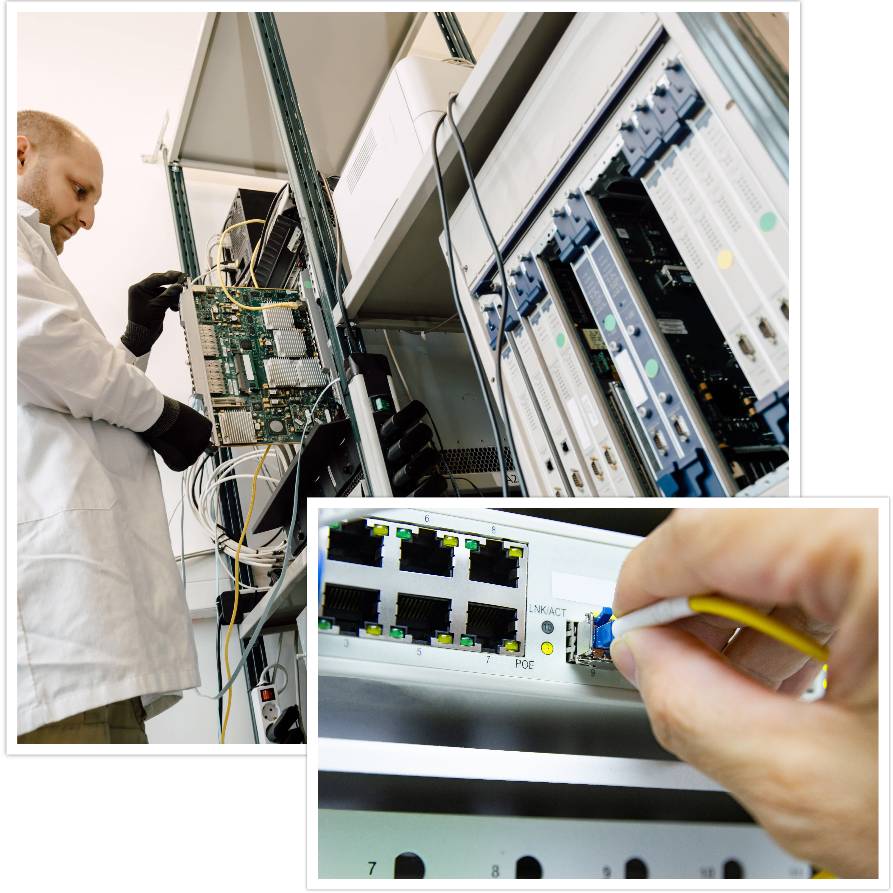
Compatible optical transceivers and the service envelope
Once the glass remains in location, the next layer of decisions moves to optics. Backhaul links hop between distances and topologies. A single ring can include short intra‑hub jumpers, 10-- 20 km goes to macro websites, and 2-- 5 km branches to small cells. A mix of 10G LR, 25G LR, and 100G CWDM4 modules appears regularly, with some operators standardizing on 25G to the radio baseband systems to ease future development. Multi‑rate, software‑configurable optics simplify spares. So do transceivers that are coded for compatibility across various host vendors.
The expression compatible optical transceivers still makes some teams nervous, typically for 2 reasons: fear of interoperability problems and concern about warranty entanglements. In practice, premium third‑party optics that abide by MSA specifications and assistance vendor‑specific DOM signatures work dependably, specifically when the provider confirms them versus your precise switch and router designs. I've sat through a lot of laboratory tests where a third‑party 100G LR4 ran indistinguishably from the OEM, consisting of error counts under tension and temperature extremes.
Be accurate about optical spending plans. If your outdoors plant utilizes tradition splices and patch panels, margin shrinks. An ODF with older adapters can include 0.5-- 1.0 dB of loss in a single hop. When you stack a mux/demux, a number of adapter pairs, and a splice tray, the overall spending plan can sneak near the limitations of a standard LR optics spec. In those cases, pay for higher‑power versions or trim insertion loss with better jumpers and fresh connectors. It's cheaper than chasing intermittent alarms later.
If your 5G technique leans into fronthaul, expect more rigid latency and jitter restraints. CPRI and eCPRI can run over dark fiber or WDM, but the optics and amplifiers need to avoid including roam. For long fronthaul, meaningful pluggables like 400ZR/ZR+ are tempting, however many operators still prefer short‑reach, low‑latency optics coupled with easy DWDM, keeping the optical path as deterministic as possible. Once again, a seasoned supplier who understands telecom and data‑com connection subtleties will guide you to parts that appreciate both latency and manageability.
Open network changes at the aggregation edge
Disaggregation arrived in the core initially, however the access and aggregation layers progressively gain from open network switches with merchant silicon. The attraction is uncomplicated: predictable efficiency, open NOS choices, lower acquisition expenses, and a much healthier procurement posture. For 5G backhaul, this normally looks like 1RU or 2RU white box changes with 25G downlinks, 100G uplinks, and timing functions baked into the hardware.
Timing matters more than it utilized to. 5G relies on stage and frequency sync for features like TDD and carrier aggregation across bands. Search for switches with IEEE 1588v2 border clock assistance and Class C/D telecom profiles, plus SyncE. Hardware timestamping accuracy under load is a make‑or‑break capability; I ask suppliers to show PTP jitter distributions at 70-- 80 percent port usage. Open NOS options have actually matured, offering section routing, EVPN, and streaming telemetry that incorporate with modern-day observability stacks.
Pairing open switches with a broad portfolio of optics from your fiber optic cables supplier keeps the supply chain resistant. When a project shifts from 25G to 50G at the last minute, you desire a transceiver partner who can reverse coded modules quickly and support their DDM precision. That agility drips into field operations: less truck rolls, shorter upkeep windows, and much easier sparing methods across business networking hardware and company gear.
Planning for density, not just distance
One trap in early 5G constructs was over-optimizing for long terms while undervaluing density. Three years later, operators needed to include extra little cells to fill mid-band protection gaps. Aggregation rings that looked roomy on paper groaned under dozens of added 10/25G links. When we prepare backhaul today, we plan not just for range and loss but for port density, power, and cooling at the aggregation sites.
I like to reserve a minimum of 30 percent port headroom at each aggregation node and design ODFs with ample slack storage and spot fields sized for growth. Pick chassis or fixed switches that can step from 100G to 400G uplinks without ripping and replacing everything. For fiber, high-count cable televisions and micro-duct pathways earn their keep here. You will not regret that spare subduct when a municipality surprises you with a cluster of wise light poles demanding power and connectivity on brief notice.
Fiber resiliency: rings, fits together, and the truth of repairs
Service-level arrangements do not work out with backhoes. The concern Fiber optic cables supplier is not if a fiber will get cut however when, and how your design trips through it. Urban 5G backhaul often leans on dual rings that can separate a failure while keeping latency penalties modest. In more heterogeneous terrains, a partial mesh with varied courses to 2 aggregation hubs gives better survivability. The cost compromise is real: more fiber paths, more permits, more splice cases. But a single incident that takes a community offline for a day can cost more in credits and brand name damage than developing the second course would have.
Diversity has to be physical, not simply sensible. We audit routes for shared avenue, common bridges, and shared manholes. If two paths share a six‑pack of ducts, they are the exact same path when difficulty gets here. Work with your supplier to recognize alternative rights‑of‑way, even if that suggests a somewhat longer run with a higher initial cost. During one city upgrade, we rerouted a secondary ring through a rail corridor instead of a crowded boulevard. It added 400 meters but got rid of 3 shared structures and a big single point of failure.
Inside the shelter: power, cooling, and the less attractive details
A backhaul node's dependability depends as much on its physical plant as on its clever routing. Dense optics and open network changes concentrate heat. The distinction in between a stable, low‑error link and a flaky one can be a couple of degrees at the transceiver cage. Check the heat dissipation of your planned optics under real workloads and ensure the chassis fan orientation matches rack airflow. I have actually seen 100G CWDM4 modules derate and toss correctable mistakes merely due to the fact that a rack had actually front‑to‑front gear nearby to front‑to‑back gear.
Power budget plans matter. DC plants sized for yesterday's 1G/10G period can have problem with modern-day aggregation. Factor in the surge for future 400G uplinks and coherent pluggables. Run the numbers with a safety margin, and don't forget that cold starts can draw more existing briefly. This is likewise where pre-terminated DC circuitry packages and identified harnesses from the provider assistance installers prevent mix-ups during tight cutovers.
Testing and turn-up: the little disciplines that avoid big headaches
Turn-up is where the cumulative quality of the develop exposes itself. A disciplined test series captures problems before customers do. I ask groups to carry out bidirectional OTDR traces for each span, pushing beyond pass/fail to check splice occasions and connector losses versus standards. Abnormalities hardly ever repair themselves.
Traffic screening must mimic the variety of real traffic. Run saturating circulations, little package tests to expose PPS limits, and blended burst profiles to observe buffer behavior. Confirm PTP under load with one‑way delay measurements if you have the gear; if not, a minimum of monitor balanced out and packet delay variation while hitting the switch hard on other ports. Measure frame loss and latency through any QoS policies you prepare to use for eCPRI or control traffic.
If you're releasing compatible optical transceivers, verify DOM readings against an external power meter on a handful of links. It builds confidence in the tracking information you'll depend on later. Keep records succinct however total, saved where operations can discover them throughout a 2 a.m. repairing session.
Open requirements and multi-vendor operations
Backhaul networks thrive when they behave like ecosystems instead of walled gardens. Accepting open reliable telecom connectivity network switches and basic optics expands your alternatives for procurement and lifecycle management. It does, however, location more duty on integration and functional discipline. Specify user interface specs plainly. Standardize on transceiver type factors where possible-- SFP28 for 25G, QSFP28 for 100G, QSFP‑DD for 400G-- and prevent snowflake options that produce orphan spares.
Work closely with your fiber optic cables provider to establish a golden set of parts throughout telecom and data‑com connection domains. That minimizes variation and accelerates field work. In one local network, we cut mean time to restore by almost 40 percent simply by standardizing patch cords, labeling plans, and transceiver SKUs across business networking hardware and provider equipment. The magic wasn't new innovation; it was eliminating friction from daily tasks.
Practical cost levers that don't mess up quality
When budget plans tighten up, the worst locations to save money are the ones that haunt you later: bad closures, deal jumpers, and spot panels that shed ferrules. There are more secure levers.
- Use micro-duct where civil costs control. It delays capex while preserving a simple course to add fiber later. Standardize transceiver SKUs and lean on suitable providers for volume pricing, after validating in your lab. Prefer ring topologies with modest extra distance over single varied spurs; operationally, rings are easier to keep track of and heal. Buy pre-terminated indoor/outdoor assemblies for constructing entries; they lower set up time and connector losses. Reserve rack space and power for future equipment instead of squeezing current builds into small footprints that you'll outgrow.
Each lever stands on its own, but together they produce a backhaul strategy that's both expense mindful and resilient.
Urban, suburban, and rural patterns
One size never fits all. Urban backhaul normally makes use of existing conduits and dense fiber plants, however space restrictions in manholes and structures require compact hardware and careful thermal preparation. Suburban networks frequently blend aerial and underground sectors, pushing you to pick cable television styles that tolerate wind and ice yet stay installer friendly. Rural builds challenge long spans and scarce huts. There, lower-loss fiber and thought-out regrowth points make the difference between a neat design and an upkeep nightmare.
Anecdotally, the most reputable rural builds I've worked on kept technology simple: dark fiber to the tower, passive DWDM for a couple of waves, and ruggedized closures with generous slack loops. In cities, the simplicity transferred to operations rather, with abundant telemetry from open switches, automation for turn-up, and constant transceiver coding throughout several vendor platforms.
Security at the transportation layer
Backhaul security does not stop at IPsec overlays. Physical layer tamper detection matters, especially near public rights‑of‑way. Some operators release fiber tracking that looks for modifications in backscatter, flagging a potential tap. More practically, stringent spot panel management and cabinet access control obstruct most accidents. At the optical layer, confirmed management for DWDM shelves and structured RBAC on switches close simple doors. A fiber optic cables supplier who supports serialized part tracking can help throughout audits and event response.
Keep in mind that 5G introduces slicing and more east‑west control traffic. Your QoS and policing must correspond throughout supplier domains. When utilizing compatible optics, guarantee DOM and metadata incorporate into your security tracking; anomalous power shifts can be an early sign of problem or a failing component.
Sustainability and lifecycle thinking
Trenches and ducts are the most significant ecological and cost impacts. Creating for reuse reduces both. Micro-duct architectures let you include capability without opening streets once again. Selecting high-count cables where labor expenses dominate pays off over decades. On hardware, open network switches with changeable fans and PSUs cut e‑waste versus sealed home appliances. Optics from providers who offer take‑back or remanufacturing programs help too.
I've seen operators recoup worth by recuperating decommissioned optics, testing, and redeploying them in less important roles. The secret is traceability. A supplier with a clear chain-of-custody and test accreditation builds the self-confidence to recycle responsibly.
What terrific suppliers look like
The finest partners act like extensions of your engineering team. They understand the peculiarities of your market-- which municipalities require rodent-resistant armoring, which energies implement rigorous separation near HV lines, which structures have hostile risers. They keep a stock of typical cable televisions, spot cords, and compatible transceivers near to your regions. They can pre‑stage sets for a weekend cutover and have a field engineer obtainable when a ferrule chips at 1 a.m.
They likewise speak both telecom and data‑com connection with complete confidence. A lot of backhaul nodes now sit near enterprise networking hardware for private 5G, MEC, or neutral host functions. Tidy handoffs matter. Providers who can straddle carrier and enterprise needs streamline procurement and reduce finger‑pointing when concerns arise.
A brief field checklist for 5G backhaul builds
- Confirm fiber type and cable construction against span lengths, environment, and future wavelength plans. Validate optical spending plans with realistic insertion loss numbers, not catalog best cases. Standardize transceiver SKUs and test suitable designs with your specific open network switches and NOS releases. Design path variety that is physically distinct, not just logically. Document everything: OTDR standards, DOM snapshots, PTP performance under load, and rack air flow orientation.
The roadway ahead: coherent pluggables, 25G radio uplinks, and beyond
The 5G transport stack will keep progressing. Coherent 400G pluggables are currently improving metro aggregation, collapsing shelves and streamlining operations. 25G to radios has actually ended up being typical, with 50G on the horizon for dense websites. Package timing is improving as silicon matures, making rigorous phase sync more reputable across multi‑vendor networks. All of this presses more obligation to the supply side: optics with tighter telemetry, cables that can be installed faster with less errors, and open switches that expose clean APIs for automation.
Through all these modifications, the principles don't move much. The function of backhaul is to protect the radio's guarantee. That occurs when style lines up with field reality and when individuals providing your fiber, optics, and switches bring practical judgment to every choice. The ideal fiber optic cables provider does more than ship reels and modules. They help you avoid the hundred little issues that otherwise build up into sluggish links, twitchy sync, and long nights. That collaboration is where 5G's lofty goals fulfill the ground and hold.